

We spend years helping students prepare for the world beyond school.
We teach critical thinking, communication, leadership, citizenship and resilience. We encourage students to be curious, adaptable and open to new perspectives.
Yet many of the qualities we hope to develop in young people are difficult to teach from a desk.
Some lessons need to be experienced.
When Learning Becomes Real
Most students can describe the concept of community. They can discuss sustainability, cultural diversity and global citizenship. They can write essays about environmental challenges and social responsibility.
But what happens when those concepts move beyond the page?
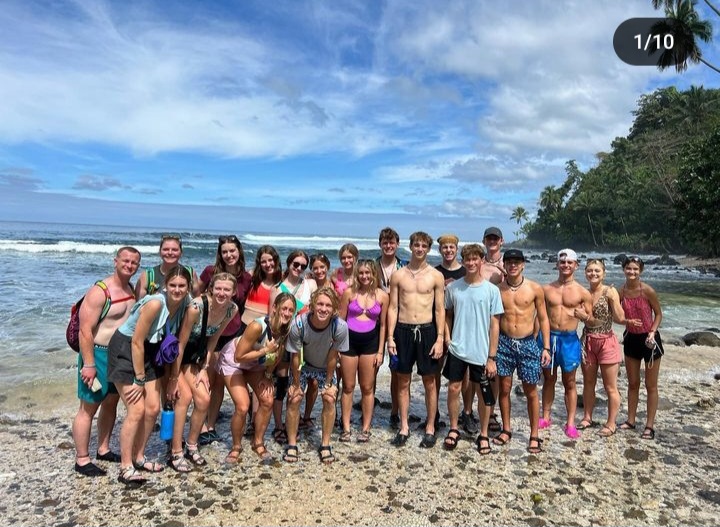
What happens when students see how a coastal community works together to care for its environment? When they experience a different culture not as observers, but as participants? When they find themselves navigating unfamiliar situations and learning to work together in new ways?
This is where experiential learning becomes powerful.
Students move from learning about the world to learning within it.
The Value of Productive Discomfort
Many of the most significant moments of learning occur when students step outside familiar routines.
In a new environment, students cannot rely on habit. They must observe more carefully, listen more attentively and engage more intentionally.
This kind of productive discomfort often leads to growth.
Students discover they are capable of more than they realised. Quiet students find their voice. Emerging leaders begin to step forward. Perspectives broaden as assumptions are challenged by lived experience.
These are difficult outcomes to measure on a report card, but they are often the outcomes teachers remember most clearly.
Learning Through Connection
One of the greatest benefits of immersion experiences is the opportunity for genuine human connection.
Students learn that culture is not something found in a textbook. It is expressed through relationships, values, stories and everyday interactions.
Through respectful engagement with local communities, students begin to understand that there are many ways of seeing the world and many ways of solving problems.
These experiences foster empathy, cultural intelligence and mutual respect.
In an increasingly connected world, these are not simply desirable qualities. They are essential skills for future citizens and leaders.
Building Global Citizenship
Schools across Australia are placing greater emphasis on helping students understand their place within the broader region.
For many students, the Pacific remains geographically close but culturally distant.
Immersion experiences create opportunities to deepen that understanding.
Students begin to see the connections between environmental sustainability, community wellbeing, economic development and cultural identity. They gain a more nuanced understanding of neighbouring countries and the diverse perspectives that shape our region.
Global citizenship becomes something more than a curriculum objective.
It becomes personal.
What Students Remember
Years after a programme has ended, students rarely recall every worksheet they completed or every fact they memorised.
What they remember are the moments that changed how they think.
The conversation that challenged an assumption, experiences that built confidence, and friendships that crossed cultural boundaries. And, the critical realisation that there are different ways to live, learn, and lead.
Experiences like these often stay with young people long after they have left school.
Education That Lasts
Academic learning remains vital, but education is about more than the transfer of knowledge.
It is about helping young people develop the skills, perspectives and understanding they need to thrive in a complex world.
For teachers, some of the most rewarding moments occur when students make connections that could never have been created inside four classroom walls.
Because while classrooms are extraordinary places for learning, sometimes the world itself becomes the best teacher.