
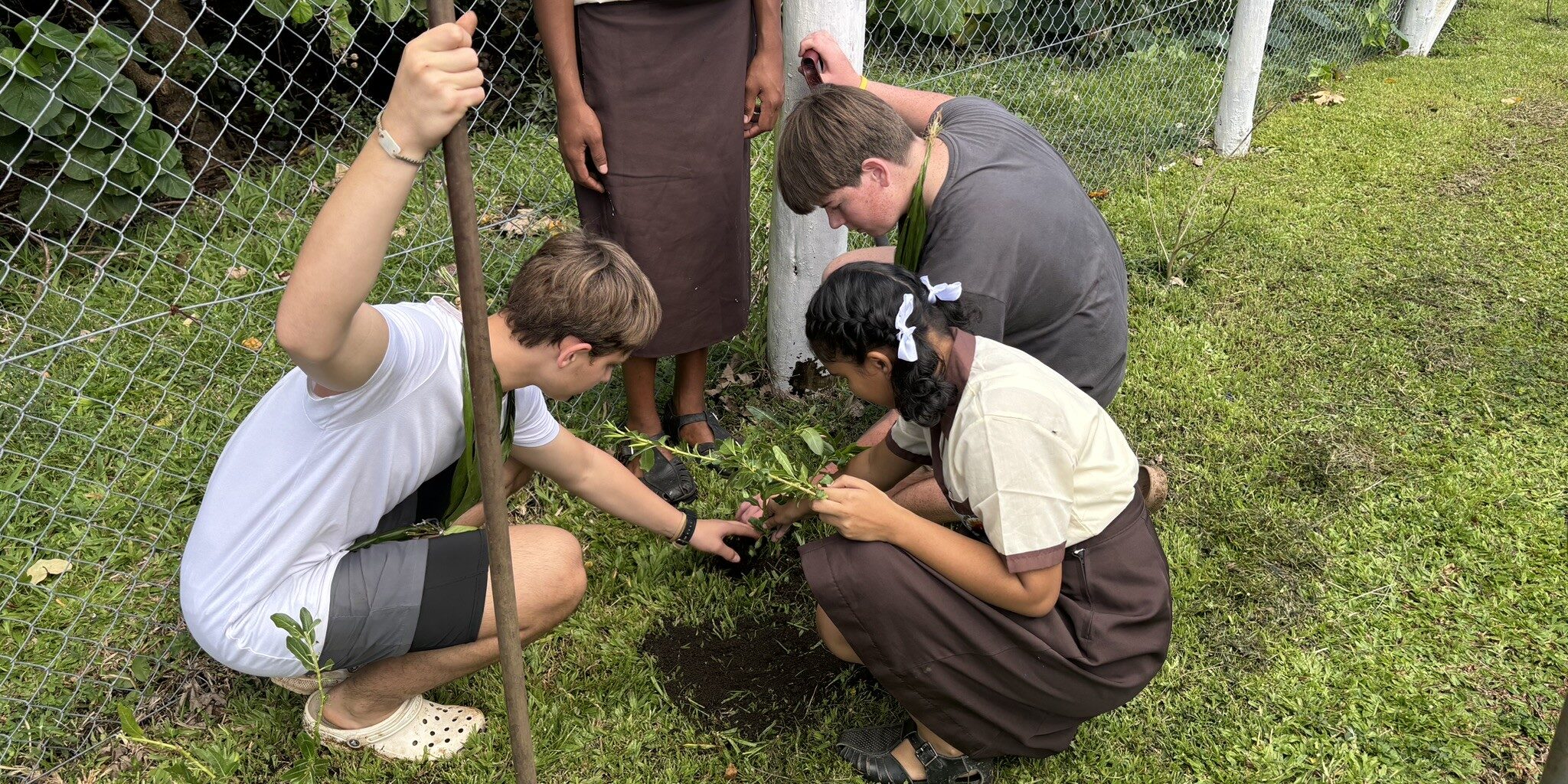
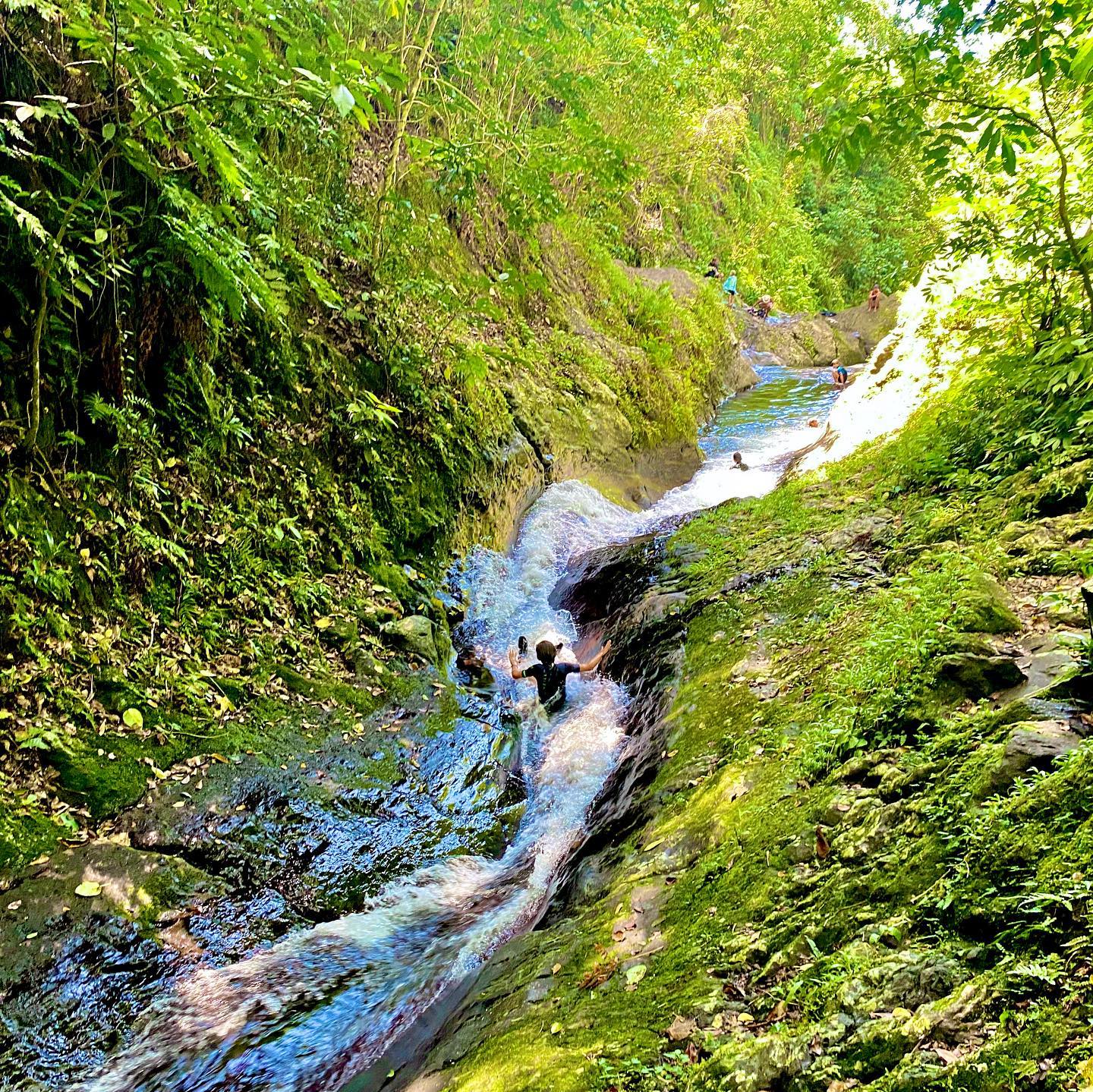
When we first established The Island Classroom on Taveuni, we were focused on creating meaningful learning experiences for students. We saw the island as an extraordinary environment for exploring biodiversity, climate adaptation, community, culture and sustainability.
What we didn’t fully appreciate at the time was how much the island itself would teach us.
Like many visitors, we arrived with ideas about sustainability shaped by classrooms, policies, reports, and public conversations. Over time, however, we came to understand that on Taveuni sustainability is not a concept. It is part of everyday life.
The island has a way of revealing the connections between people, resources, community, and environment. It encourages you to pay attention to things that are often invisible in places where infrastructure is reliable and abundance is taken for granted.
When Resources Are Not Unlimited
In Australia and New Zealand, many of us rarely think about where our water comes from. It arrives when we turn on a tap and disappears when it drains away. Electricity is expected to be available. Supermarket shelves are stocked with food regardless of the season. Transport networks generally function as planned.
These systems are so dependable that we seldom notice them.
Living on Taveuni has encouraged us to notice.
Recent water challenges across Fiji have provided a timely reminder that access to resources cannot always be assumed. Rainfall on Taveuni has been dramatically reduced compared with what many residents would normally expect, placing pressure on families, communities. and businesses. Conversations about water are no longer theoretical discussions about environmental management. They are practical conversations about everyday life.
Witnessing these realities has deepened our understanding of sustainability far more than reading another report ever could.
Climate Change Becomes Personal
Many students arrive having studied climate change in school. They understand the science and are familiar with the language of carbon emissions, adaptation and resilience.
What they often haven’t experienced is how climate change intersects with everyday decisions.
On Taveuni, students begin to see how changes in weather patterns influence agriculture, water availability, transport, and community wellbeing. Climate adaptation is no longer a future challenge located somewhere else. It becomes visible through conversations, observations, and lived experience.
The lesson is not one of vulnerability alone. It is also a lesson in resilience, and innovation. Communities adapt, respond, and continue to find ways forward. Students come to understand that responding to change is as much about people and relationships as it is about infrastructure and technology.
Community Is Part of the Solution
One of the most enduring lessons we have learnt on Taveuni is that resilience is rarely an individual achievement.
When challenges arise, communities draw upon relationships, local knowledge, and collective responsibility. People help each other. Information is shared. Resources are pooled. Solutions are often found through cooperation rather than isolation.
For many students, this offers a valuable perspective. They begin to see that resilience is not simply about being self-sufficient. It is also about belonging to a community and contributing to it.
In a world that often emphasises individual achievement, this can be a profound lesson.
The Things Students Notice
Some of the most meaningful learning occurs through small observations.
Students notice that food availability is shaped by seasonality and supply chains. They notice the different ways communities organise themselves. They notice how environmental conditions influence everyday decisions and how people adapt when circumstances change.
These observations often lead to questions.
What do we take for granted at home?
What systems support our daily lives?
How would we respond if those systems were interrupted?
What can we learn from communities that have developed strong capacities to adapt?
These questions emerge naturally because students are engaging with a place rather than simply studying it.
The Island Continues to Teach
One of the reasons we describe Taveuni as a living classroom is because the learning never stands still.
The island continues to teach us about sustainability, adaptation, resourcefulness, and community. It reminds us that environmental issues are not separate from culture, wellbeing or daily life. They are deeply connected.
For students, teachers and school leaders, this creates a unique context for learning. The lessons are not confined to a classroom or a workshop. They emerge through conversations, observations and experiences that are grounded in a real place and real community.
We established The Island Classroom to create opportunities for students to learn from the Pacific.
What we have discovered along the way is that the island continues to teach all of us.
And perhaps that is one of the most valuable lessons of all.
Leave a Reply